Year 1Vowel teams
ow words
The letters o and w work together to make the /ow/ sound.
The letters o and w work together to make the long /oa/ sound.
ow/ow/ as in owl
Words with ow
Tap a word to see its sounds and hear it.
ow at the start
ow in the middle
ow at the end
Read ow in a sentence.
Every sentence is checked against the sound.
- 1The cow is brown.
- 2Watch the snow blow.
- 3An owl sat down.
- 4Show me the yellow bowl.
How to teach ow
- Introduce the vowel digraph. Explain that a vowel digraph is two vowels that work together to make one sound.
- Model saying the target phoneme three times.
- Students repeat.
- Check articulation and correct mouth placement.
- Identify the phoneme in the example words.
- Explain the spelling generalisation: We usually use ow to spell the /ow/ phoneme at the end of words or before l, n or d (e.g. cow, owl, brown, crowd).
- Explain that the vowel digraph ow can also represent the long /oa/ phoneme (e.g. snow, grow, throw). Explain that students will learn this pronunciation in a separate lesson.
- Introduce the vowel digraph. Explain that a vowel digraph is two vowels that work together to make one sound.
- Model saying the target phoneme three times.
- Students repeat.
- Check articulation and correct mouth placement.
- Identify the phoneme in the example words.
- Explain the spelling generalisation: We usually use ow to spell the long /oa/ phoneme at the end of words or syllables (e.g. snow, grow, throw). In the middle of words, we usually use oa instead (e.g. boat, coat, road).
- Optional extension: Explain that ow can also represent the /ow/ phoneme, as in cow, brown, and owl.
Other ways to spell /ow/
- ou
- ough
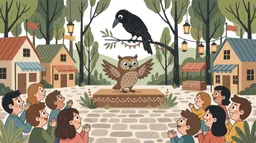
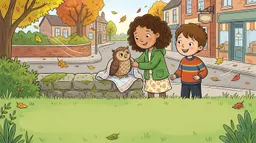
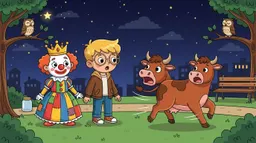
Decodable stories with ow.
From the Phonicspal library. Sign up free to read them.
Make a whole ow lesson.
Slides, words and sentences, matched to the sounds your class has learned.